
For years, personalized cancer vaccines felt like one of those medical promises that was always five years away: brilliant in theory, endlessly hyped, but perpetually stuck in early-stage trials.
That dynamic shifted when Merck and Moderna released topline Phase 3 data for their experimental mRNA therapy, intismeran autogene. Paired with the checkpoint inhibitor Keytruda, the custom-made vaccine outperformed Keytruda alone in preventing recurrence and distant spread for patients with high-risk melanoma who had already undergone surgery.
It is a landmark moment—the first time a tailored neoantigen treatment has cleared a large-scale late-stage trial. But as any oncologist will tell you, a press release isn't a peer-reviewed dataset.
While the companies declared the results "clinically meaningful," they haven't shared the actual numbers yet. We don't know the absolute reduction in recurrence rates, the hazard ratios, or how much longer patients ultimately live. Those figures, expected at an upcoming medical congress, will dictate whether this therapy becomes a new standard of care or just an incremental improvement with a massive price tag.
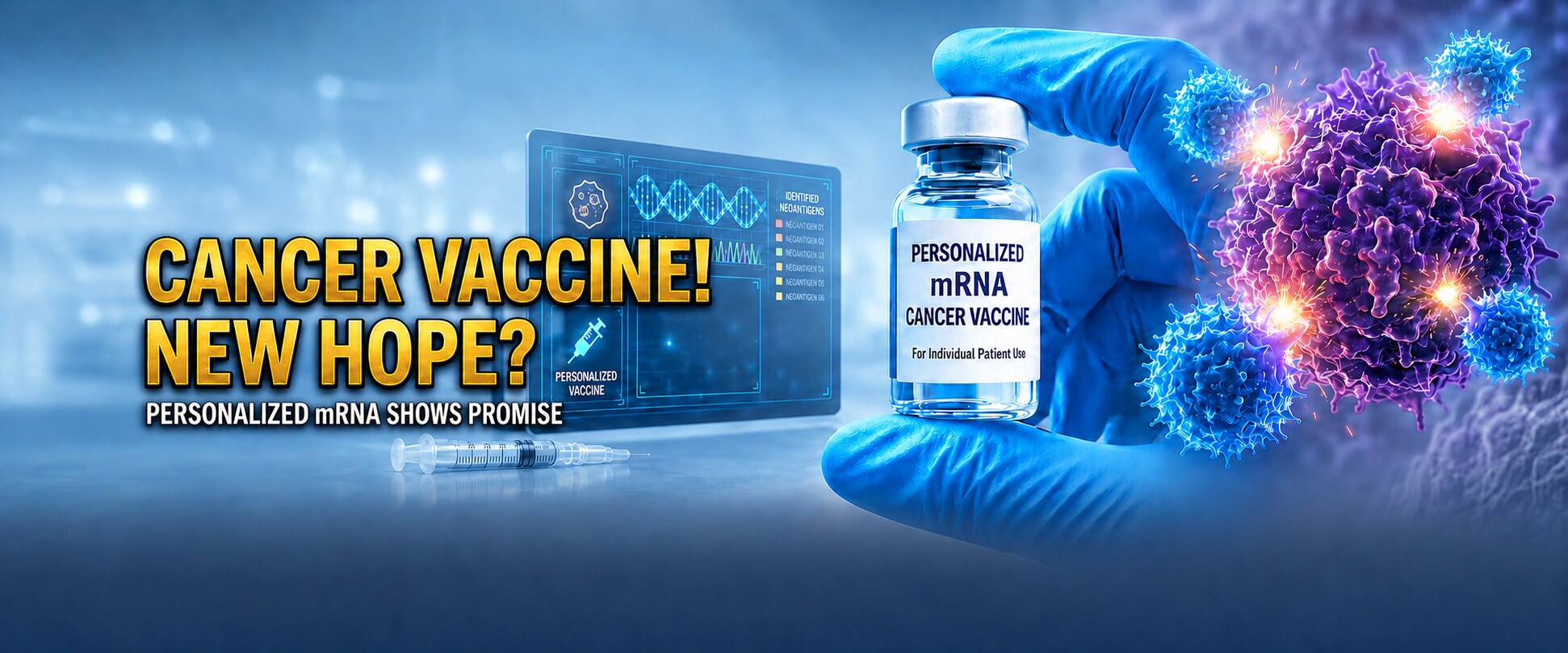
The distinction between this and the vaccines sitting in your local pharmacy is fundamental. You can't mass-produce intismeran and stock it on a hospital shelf. When a surgeon removes a patient's melanoma, a tissue sample is sent for genetic sequencing to map the tumor's specific mutations. Algorithms pick out up to 34 abnormal proteins—neoantigens—that are unique to that tumor. Merck and Moderna then manufacture a custom batch of mRNA designed to train the patient's T cells to hunt down any rogue cells left behind.
In short, Keytruda takes the biological brakes off the immune system, while intismeran hands it a wanted poster.
That customized approach is precisely what makes the strategy so promising—and what makes its rollout terrifying for healthcare administrators.
If approved, the logistics will be a nightmare. Getting a tumor biopsied, sequenced, computationally analyzed, synthesized into mRNA, quality-tested, and shipped back to a clinic before a patient’s cancer returns requires a seamless supply chain. Major cancer centers in the U.S. and Europe might pull it off, but smaller regional hospitals—and health systems across the Caribbean, Latin America, and sub-Saharan Africa—aren't remotely equipped for that pipeline.
There is also the matter of money. Individualized manufacturing is inherently expensive. Before insurers and global health authorities write blank checks, they will want to see if a custom vaccine actually extends overall survival rather than just delaying a relapse by a few months.
The Phase 3 melanoma victory proves the underlying biology works in a large clinical population. That alone is a historic leap. But transforming a custom-built laboratory breakthrough into something a patient in a community clinic can actually get before their tumor comes back is a hurdle science alone can't solve.